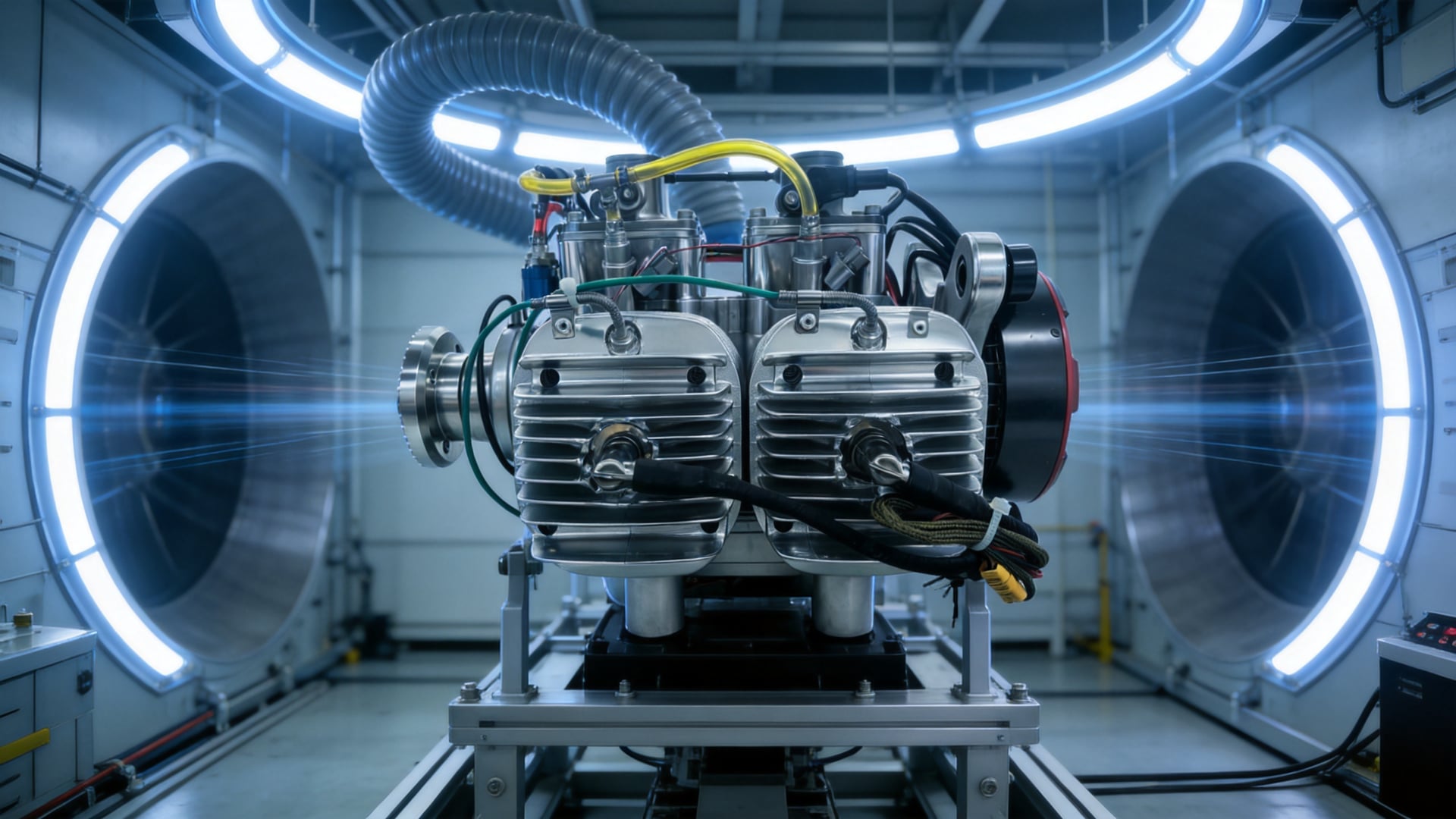
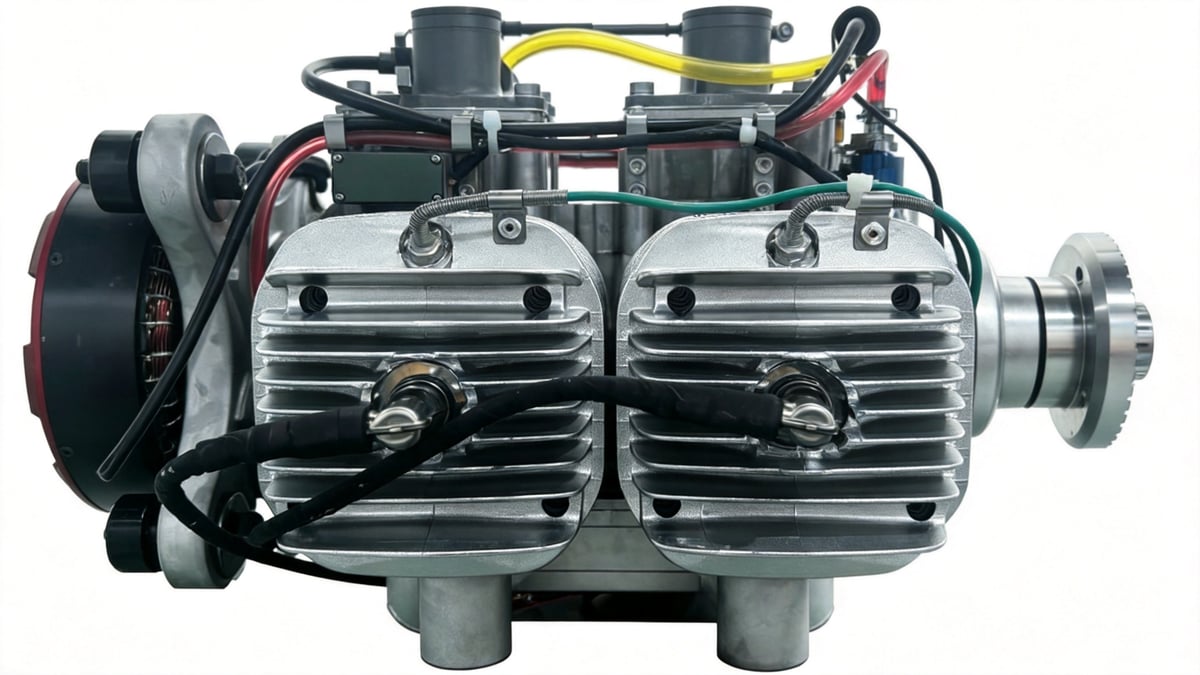
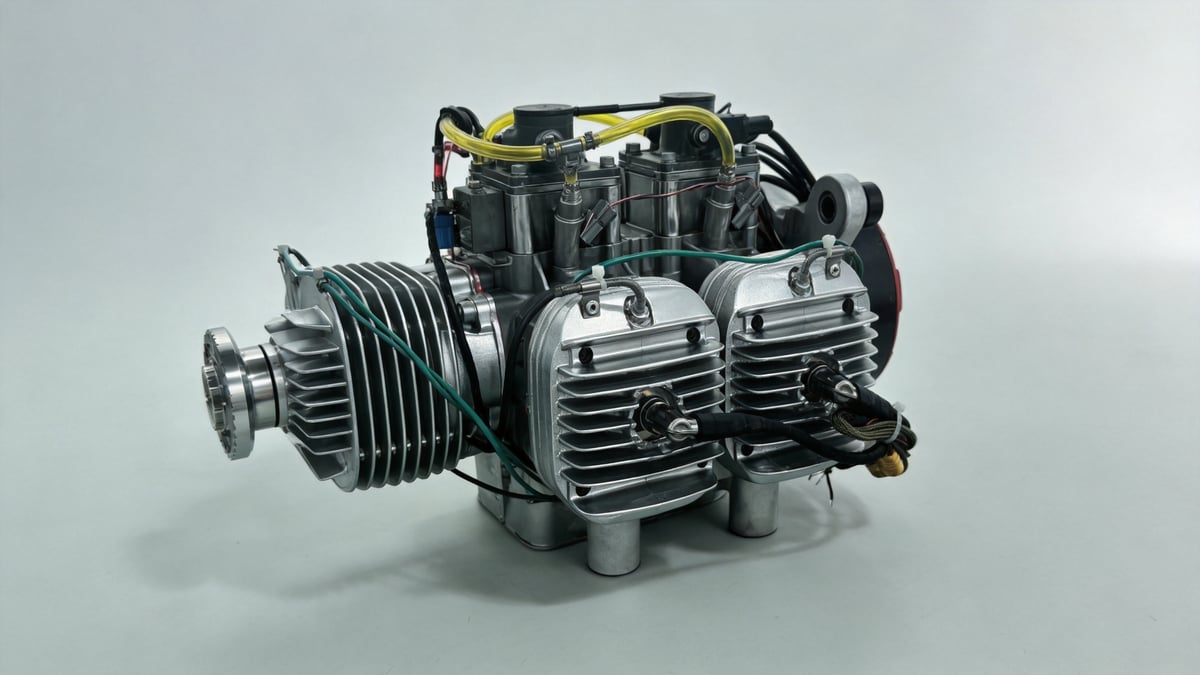
The DroneWNG · HW550 is a high-efficiency hybrid gasoline propulsion system engineered for mid-to-large-size long-endurance VTOL hybrid fixed-wings and pusher UAV platforms.
As the beating heart of large-sized tactical fleets, the HW550 integrates advanced crankcase scavenge, gas-mixed combustion control with a highly consolidated structural monocoque. This compact layout encapsulates the fuel system, ignition, central ECU processors, adaptive fuel pumps, and a 2000W brushless starter-generator within a rigid, low-vibration housing. Its outstanding fuel economy supports extended BVLOS surveying and border defense security missions with optimized electrical power generation.
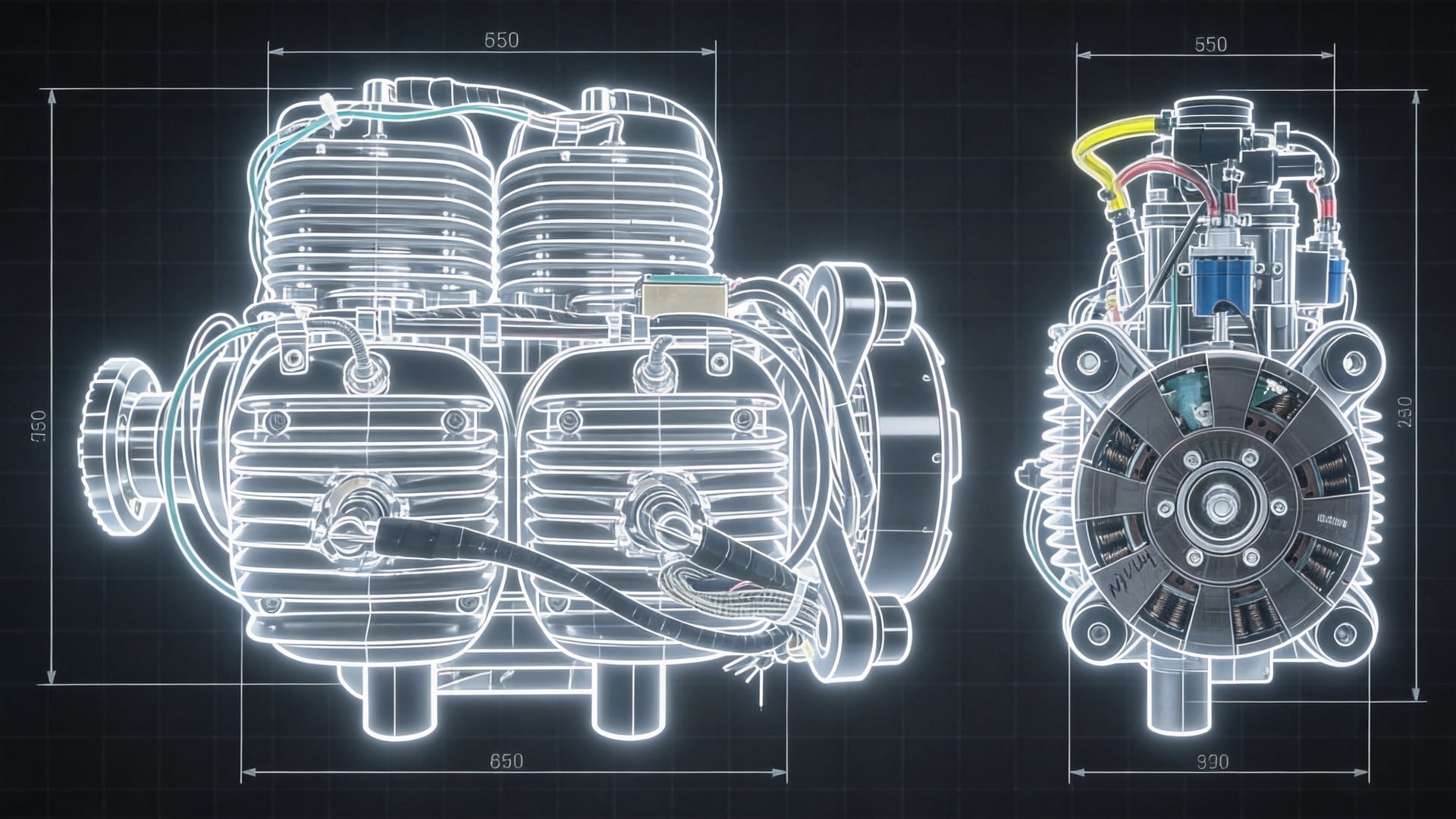
Engineered with a high-strength composite casing and aviation-grade alloy structures, supporting continuous operations under harsh thermal variations and remote theater environments.
Designed to withstand extreme field deployments, the HW550 excels in vibration dampening, power-to-weight ratio, and high-altitude flight safety.
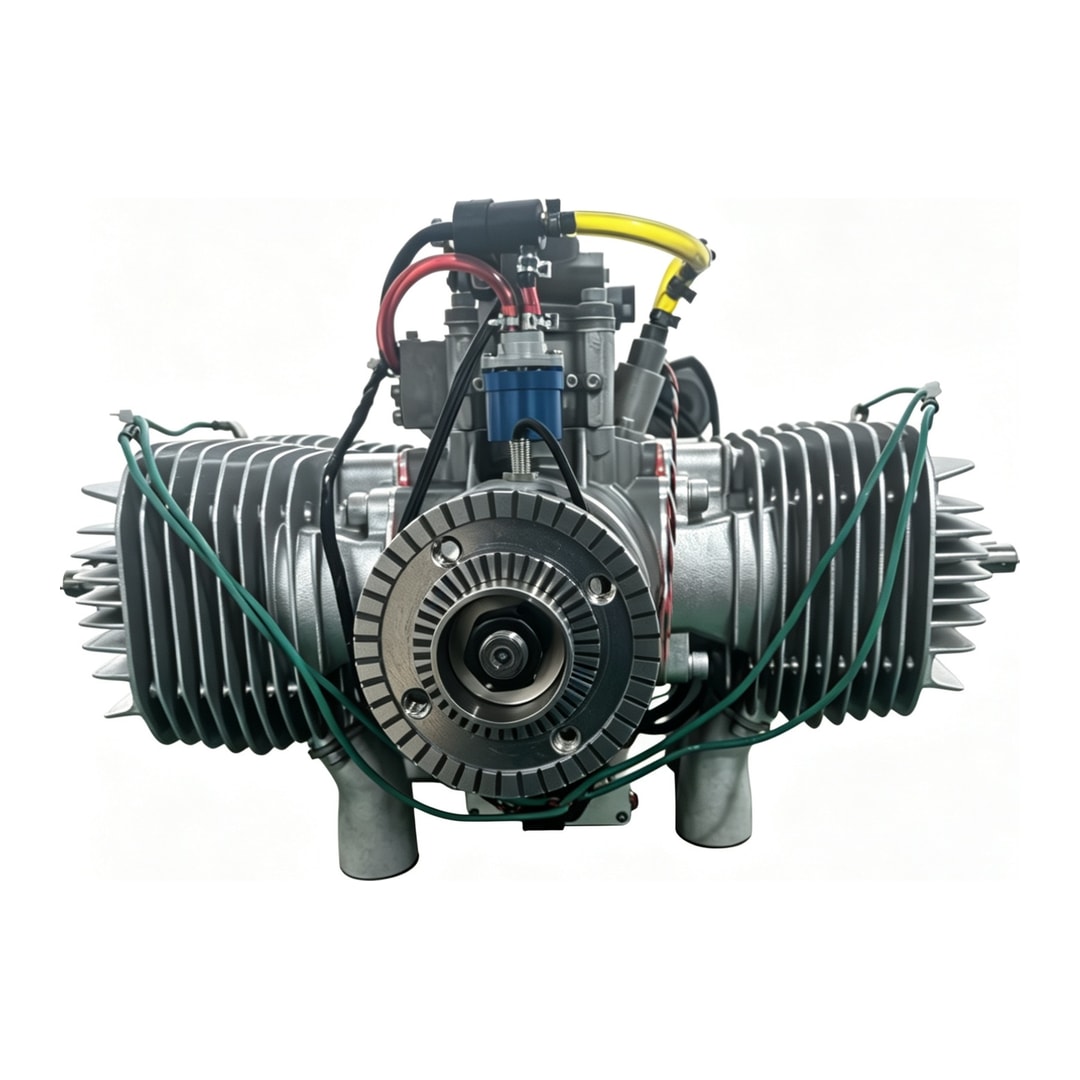
The dual cylinders adopt a symmetric boxer engine layout. Symmetrically opposed piston cycles naturally neutralize primary reciprocating inertial forces, dramatically dampening low-frequency mechanical vibration. This structural balance protects high-end visible/infrared thermal seekers, radiometric gas sensors, and mapping payloads from signal noise.
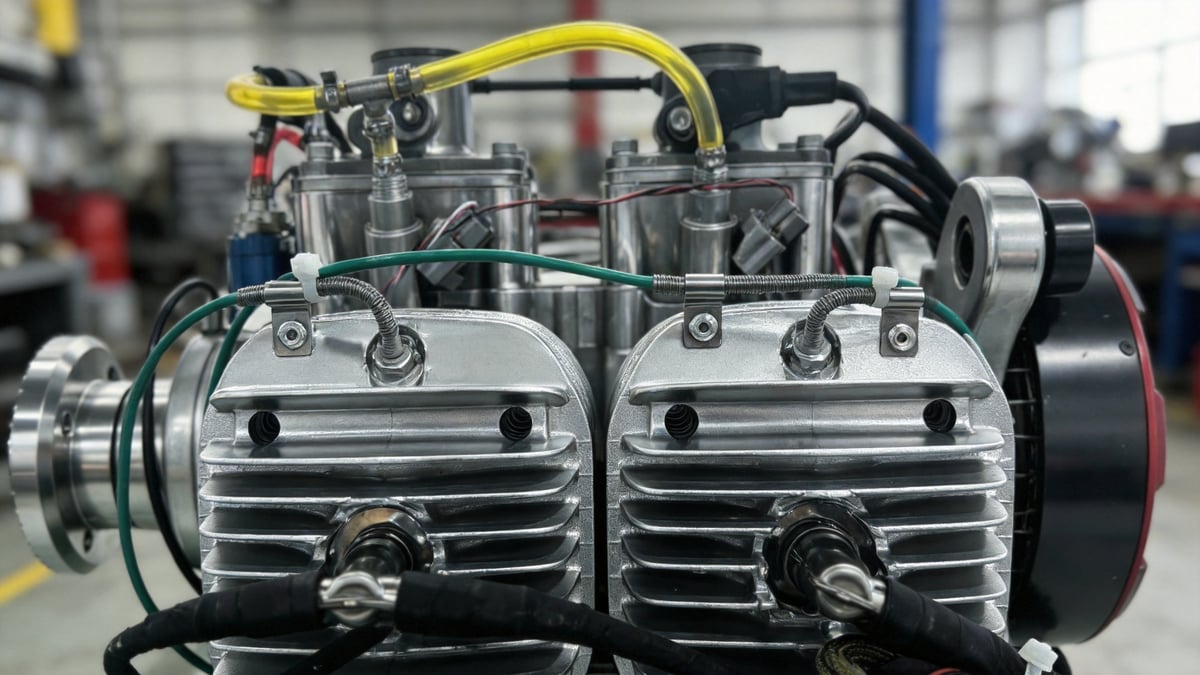
The proprietary Electronic Fuel Injection (EFI) system continuously monitors surrounding air pressure and intake air temperatures. From -40°C to +50°C temperatures and altitudes up to 5,000 meters AMSL, the system adjusts fuel flow within microseconds, keeping fuel consumption consistently low and resolving high-altitude range decay.
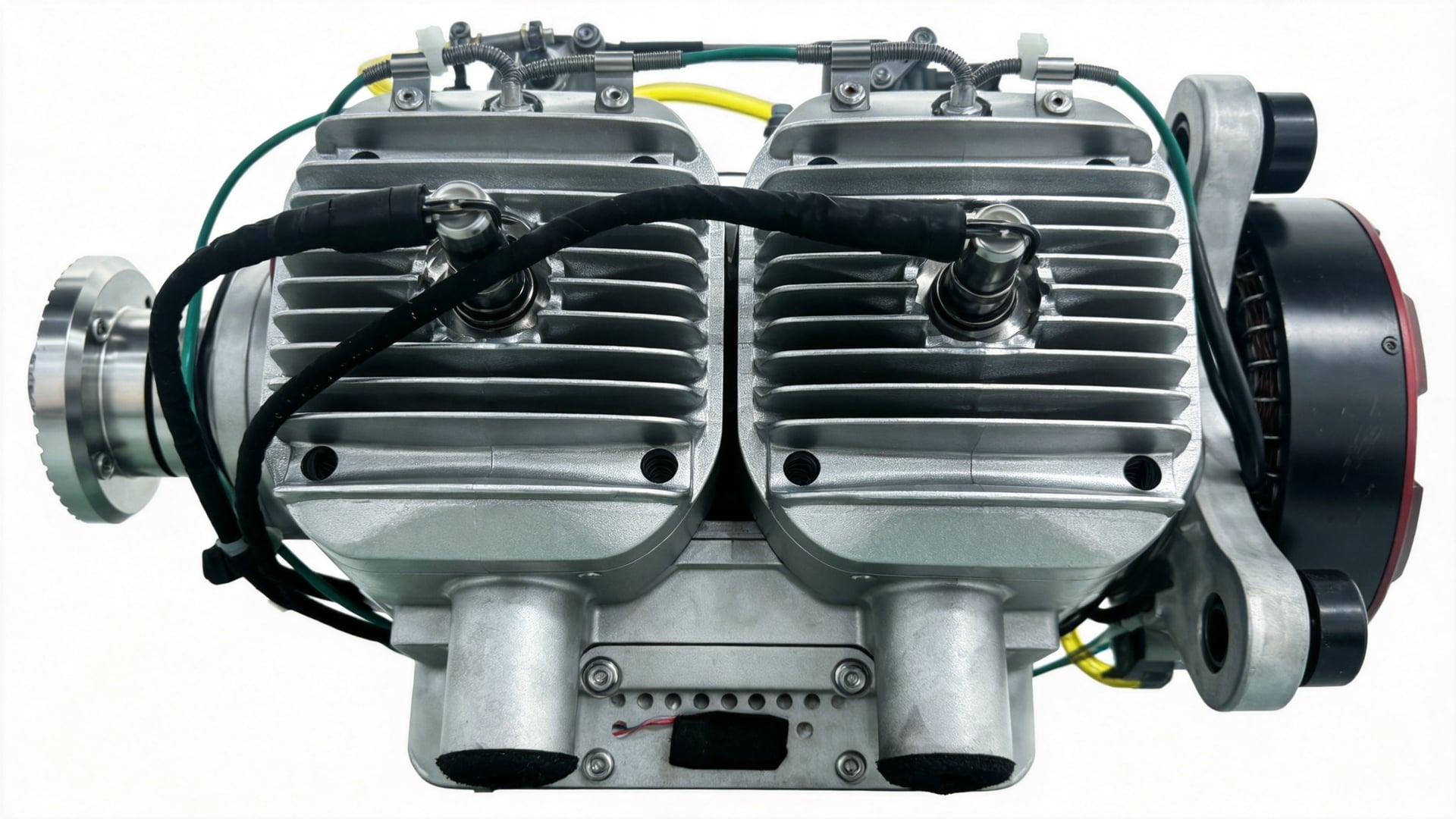
The HW550 is built with weather-resistant, rugged connectors to support rapid field turnaround and automated fleet pre-flight operations.
The crankshaft is seamlessly integrated with a high-durability brushless motor. It supports remote air/ground starting, and automatically transitions into power-generation mode once the engine exceeds 3,000 RPM. Producing 2000W @ 28V of regulated current, it feeds onboard avionics and recharges primary flight packs.
The engine ECU supports native RS422 serial and CAN-bus telemetry. Onboard flight controllers can read active RPM, cylinder temperatures, generator load, and fuel rate over standard MAVLink. Telemetry supports remote priming, throttle testing, and one-key Built-In Tests (Bite Check).
Aviation internal combustion systems develop extreme thermal cycles and torque loads. Ground crews must observe strict SOP guidelines.
When bolting the engine flange to the firewall, main structural screws must be tightened in a crosswise pattern to a recommended torque of 15~20 Nm. High-elasticity rubber dampers should retain a 10~12mm compression room to buffer stress.
Main propeller bolts require a locking torque of 20Nm. Out-of-factory guidelines mandate safety lock-wire across adjacent screws, protecting the assembly against high-frequency resonance.
Because air-cooled engines depend on flight wind velocities, static ground tests must not exceed 5 minutes. If bench tests are prolonged, an external cooling fan with a velocity >35 m/s must focus air directly over the cylinder fins.
Strictly maintain a 50:1 pre-mix ratio using 92# or above octane fuel with high-performance 2-stroke engine oil. Prior to startup, verify line pressure to exhaust air pockets and prevent mid-air flameout.
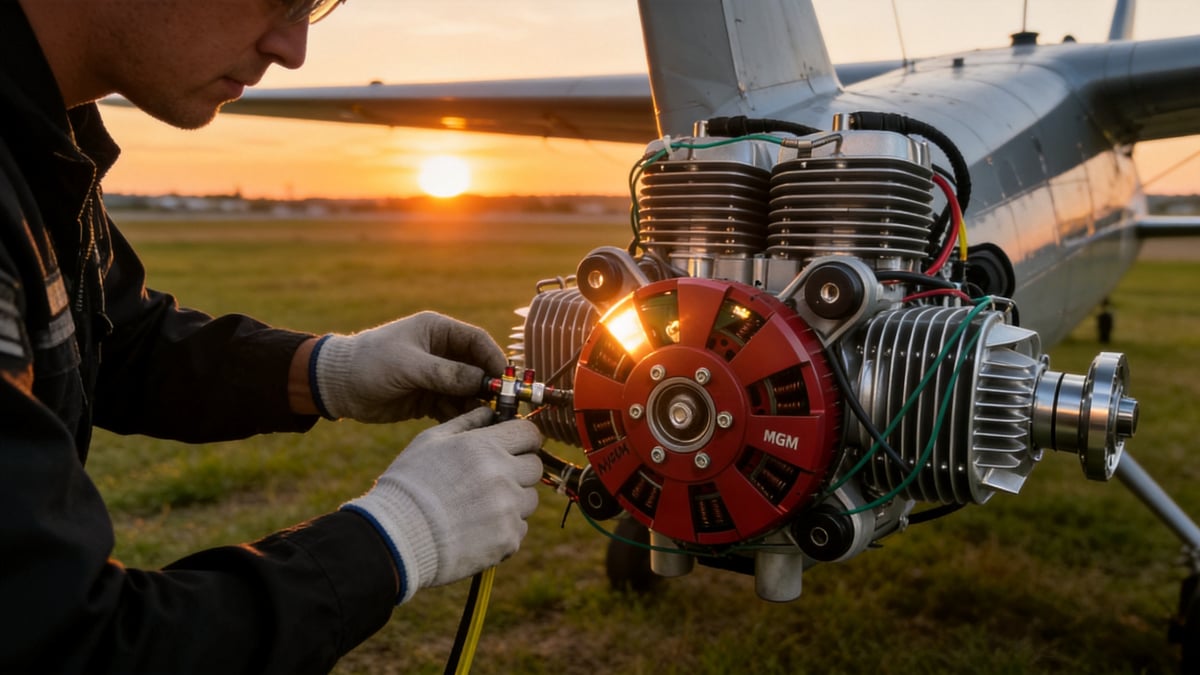
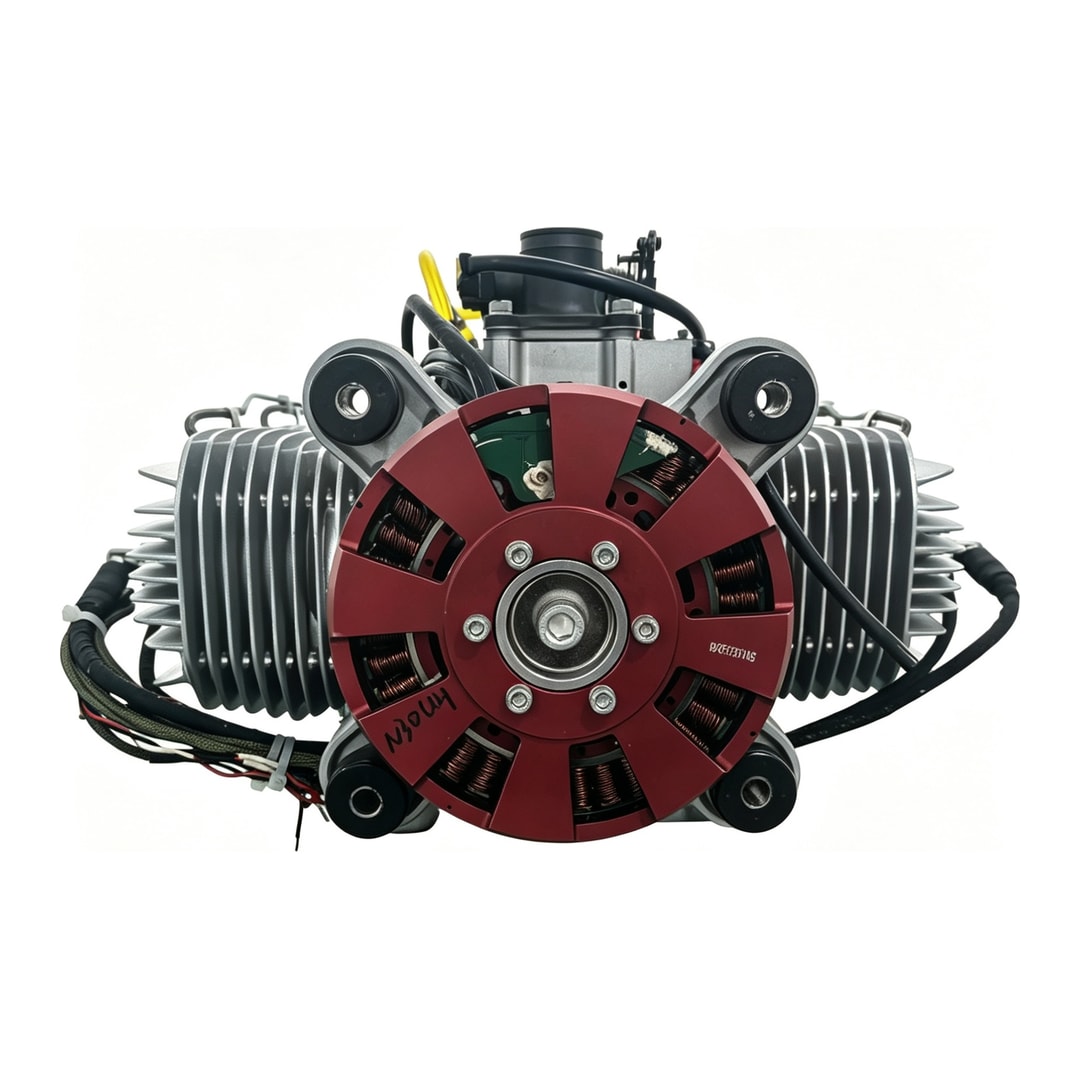
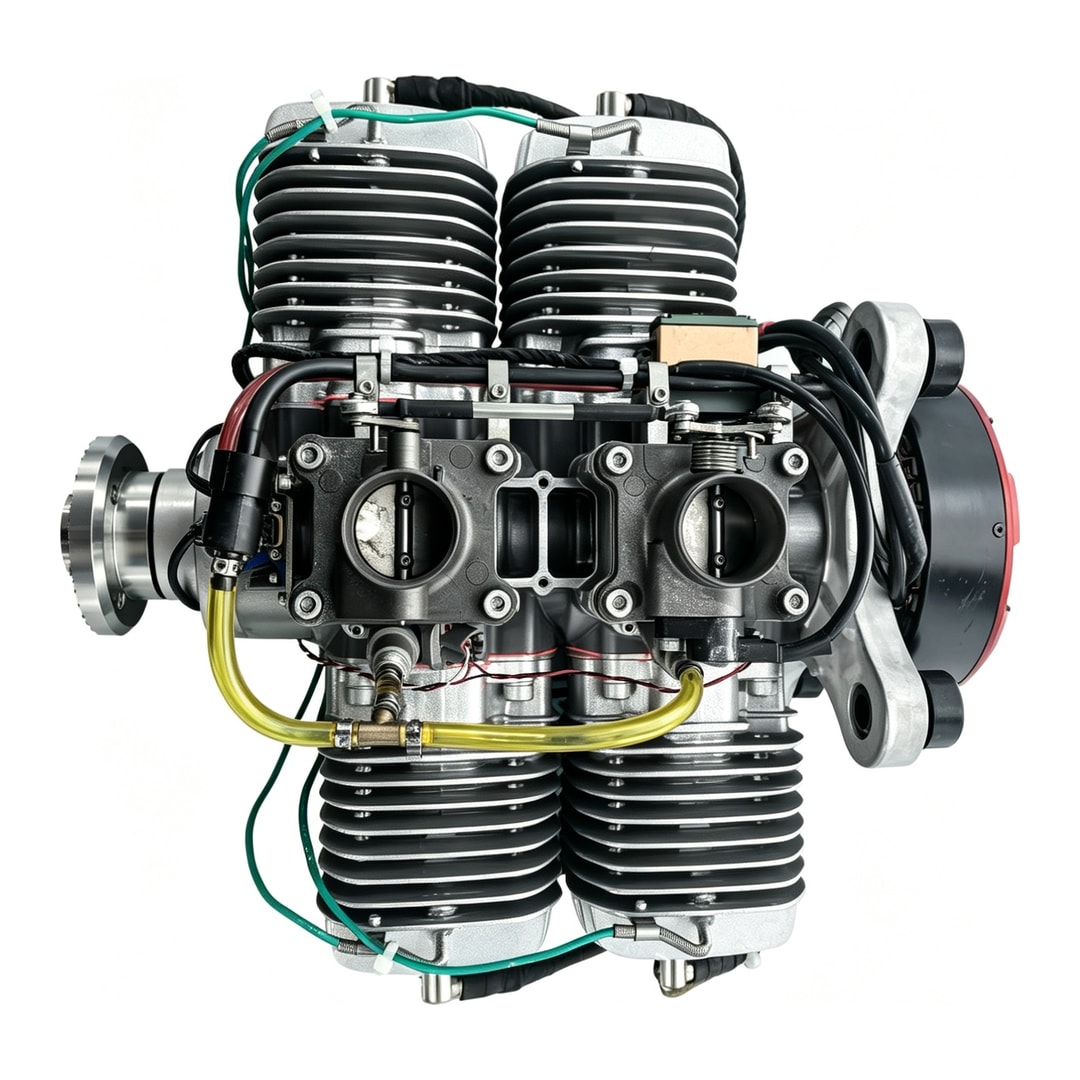
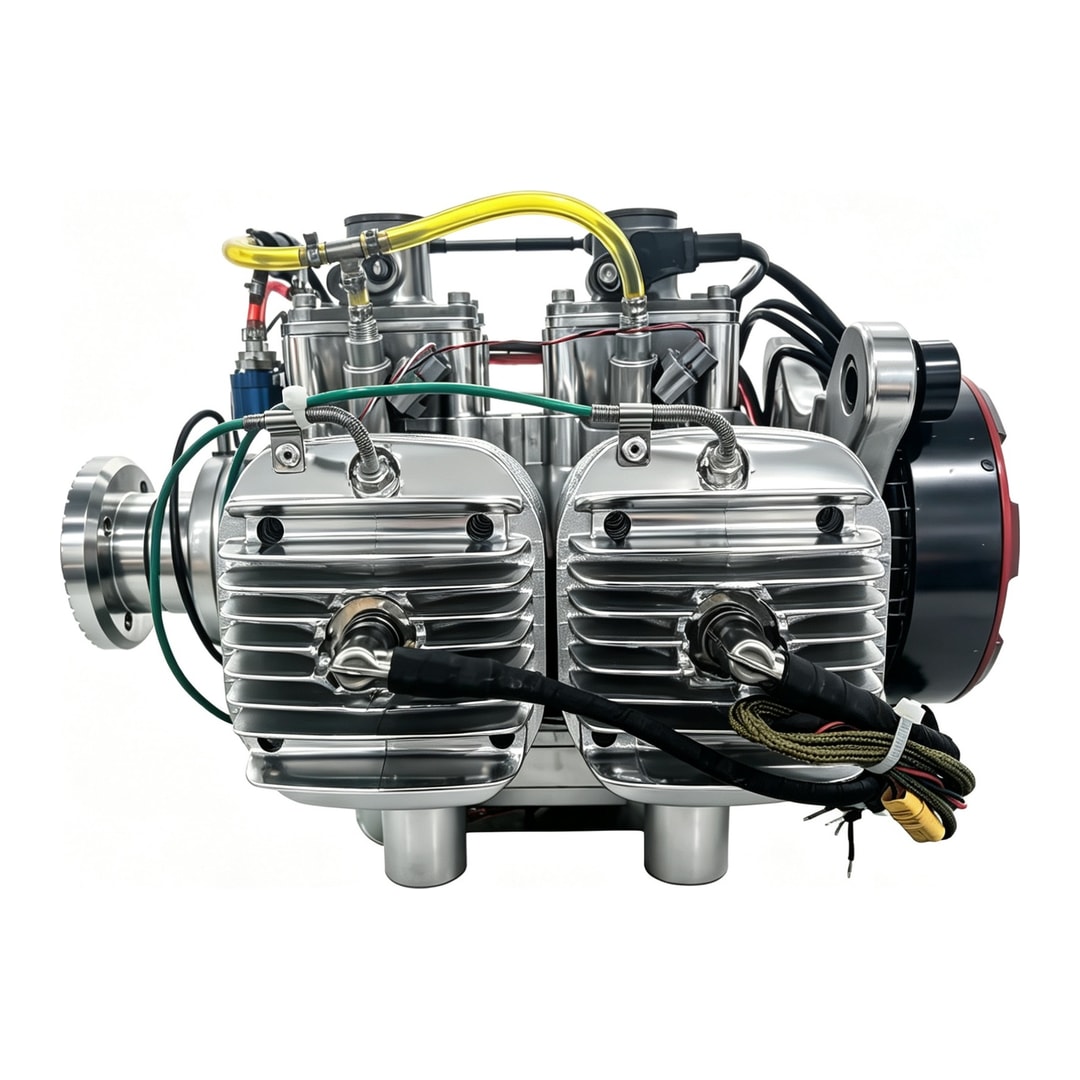
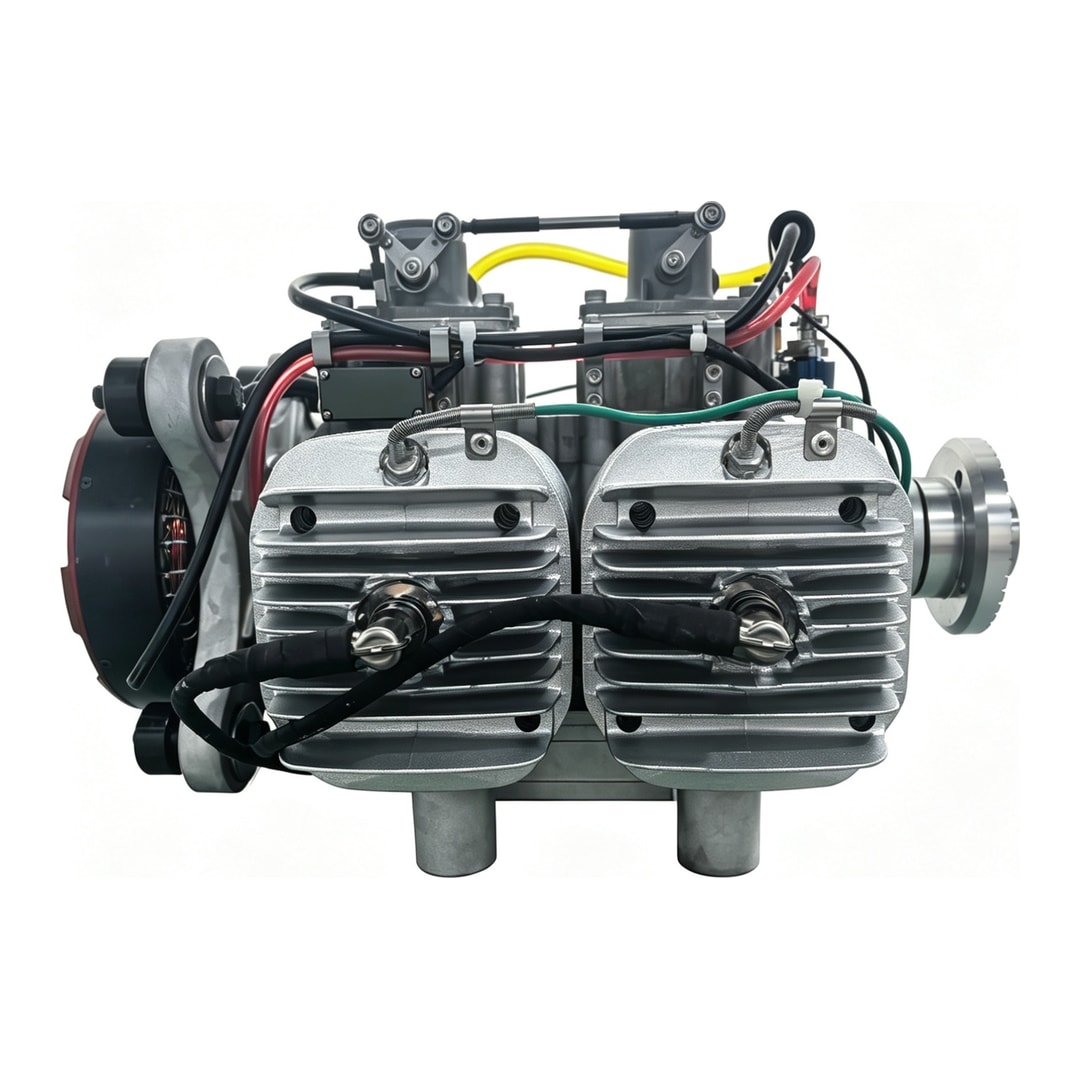
The five views of this product series showcase the true, high-precision assembly process of components and piping layout, providing 1:1 lossless pure product details:
Disclaimer and International Civil Aviation Standards
1. This product is a medium-to-large kinetic energy aviation propulsion device. User operations and field running must be executed by technically qualified personnel. Unprofessional personnel are strictly prohibited from disassembling the engine body at will.
2. During operation, personnel must be kept away from the rotating working surface of the propeller. Maintain a standard physical safety radius of at least 10 meters.
3. The manufacturer accepts no legal or financial liability for any direct or indirect personal injury, casualty, or property loss caused by failure to install according to standard specifications, failure to perform pre-flight safety checks, or violating speed limits during flight.