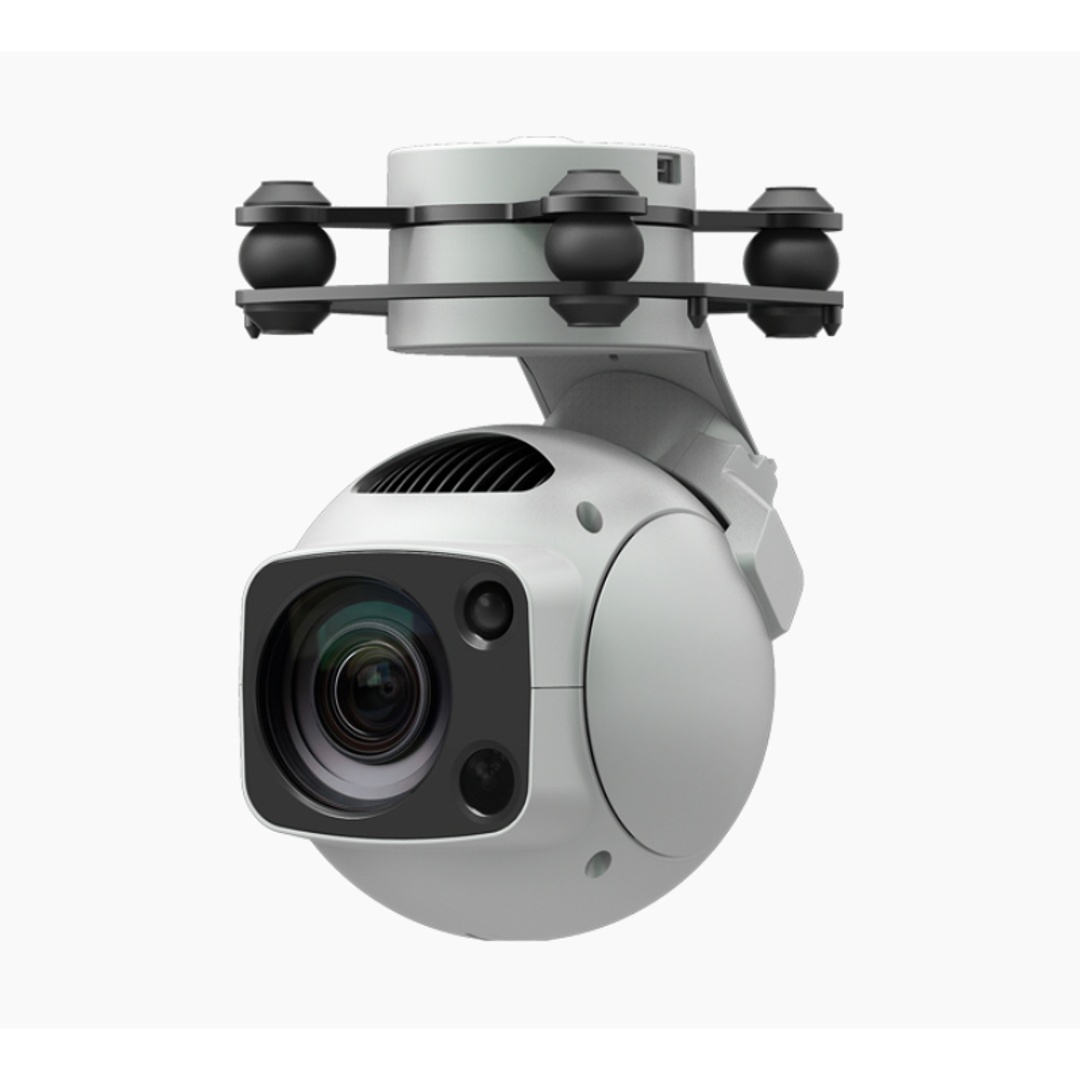
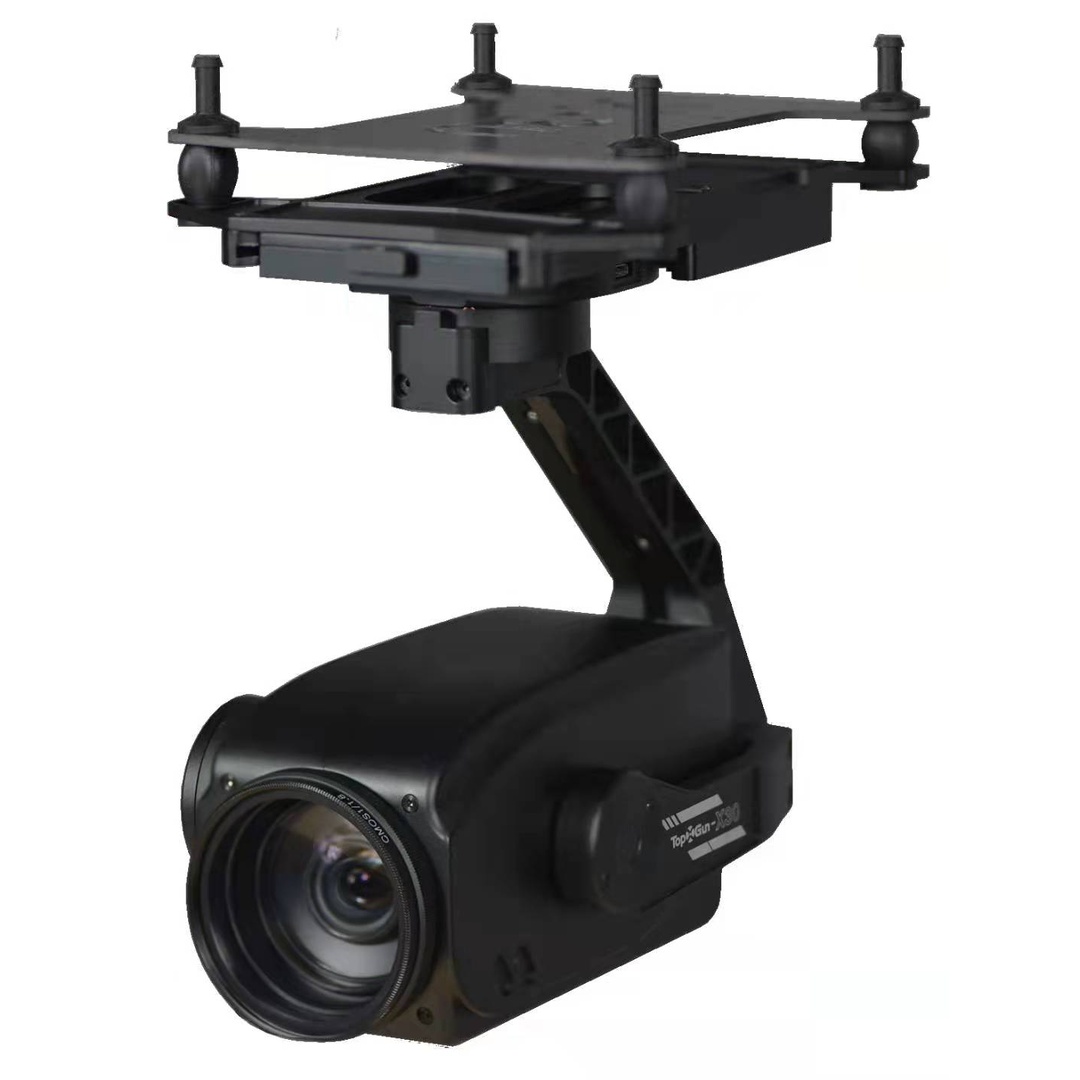
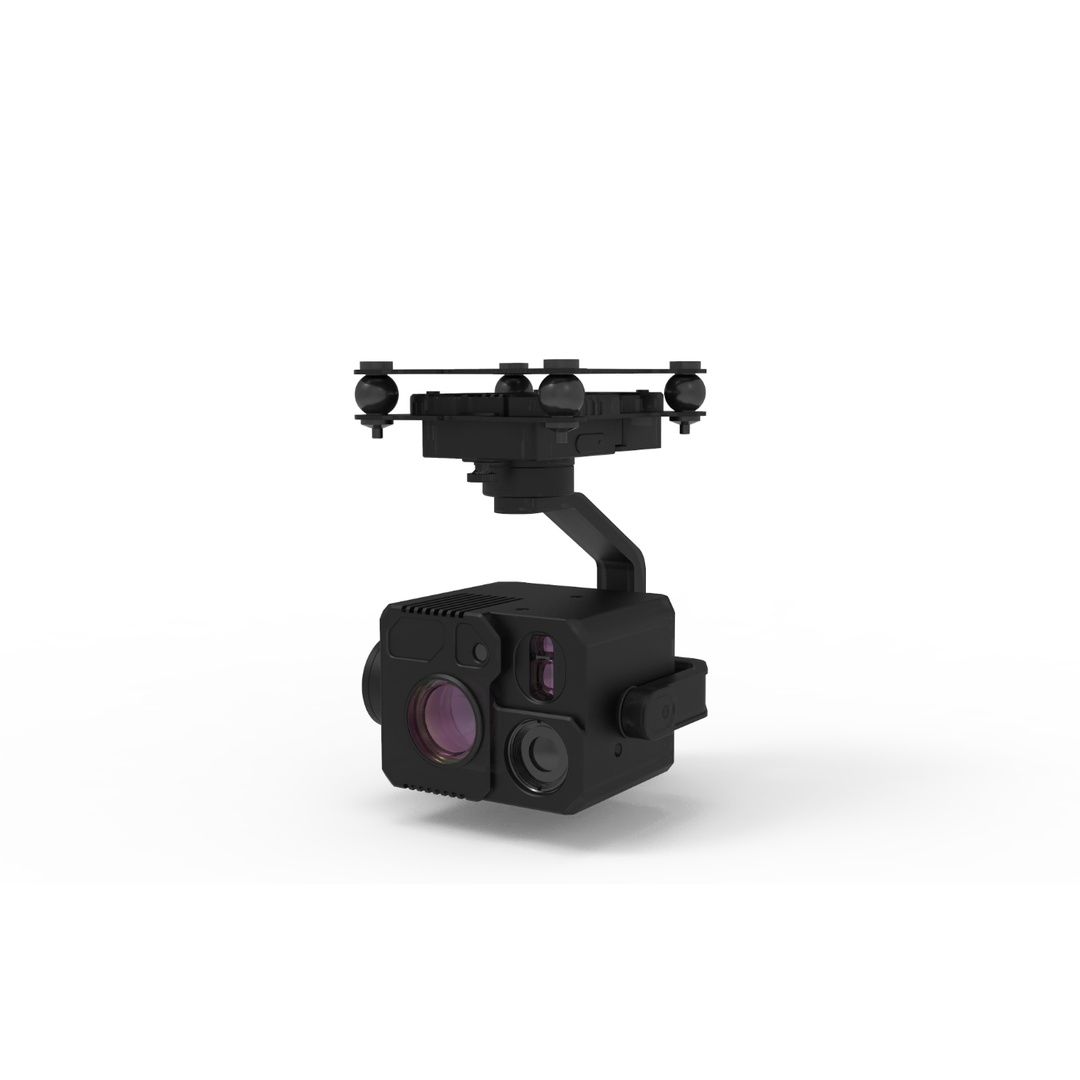
DroneWNG-Sensing Gimbal is a high-rigidity, highly sensitive, multi-sensor integrated mechanical stabilization gimbal designed for heavy tactical platforms.
Serving as the eyes of tactical reconnaissance operations, the DroneWNG-Sensing Gimbal features CNC machined aerospace aluminum alloy stabilizing arms with direct-drive brushless motors. Utilizing a dampening rubber ball matrix, the gimbal completely absorbs high-frequency vibrations from weapons firing or strong wind shear, keeping pointing precision within ±0.008° to 0.01°.
The gimbal can be configured with a 50 MP visible sensor, a 640 x 704 thermal core, and a 1,000 m pulsed laser rangefinder. Highly integrated and compatible with Pixhawk Cube systems, it fits seamlessly onto F1200 tactical platforms and FDD50P fixed-wings to provide day/night reconnaissance under heavy dust, smoke, or complete darkness.
Maintaining stable imagery during high-speed maneuvers or rapid attitude changes requires high motor response frequencies. The YC-Series implements precision active compensation.
Designed for tactical integration, the YC-Series features waterproof and ruggedized electrical interfaces.
Features a standardized quick-disconnect rail and 42-pin gold-plated blind mate connectors. The payload can be physically and electrically locked onto the drone belly in 30 seconds.
Supports dual SBUS control inputs. The primary channel allows the pilot to steer the camera search path, while the secondary channel lets the payload operator control tilt and zoom.
The tactical flagship features an onboard processor to fuse visible contours, infrared thermal profiles, and laser telemetry on the GCS screen, improving lock-on accuracy.
To ensure pointing accuracy and extend bearing lifespan in marine or desert environments, ground crew must follow strict SOPs.
Before critical missions or after installing the payload, perform a 6-axis IMU calibration on a level calibration table. Connect via Mission Planner to fine-tune motor PID gains and eliminate steady-state error.
Since the Yaw axis uses a continuous 360° slip ring, inspect the rotating seals for sand or salt build-up every 100 flight hours. Clean using a non-contact dry canned air blast.
Check the four silicone dampening balls regularly for dry rot, micro-cracks, or permanent deformation. Replace the entire set if dampening efficiency degrades; never mix different stiffnesses.
The multi-layer lens coating is sensitive to oils and fingerprints. Clean only using lens-cleaning paper and absolute ethanol. Fit the protective cover and store in a dry cabinet (humidity < 30%).